


Total Property -
Action aplenty in the Bay
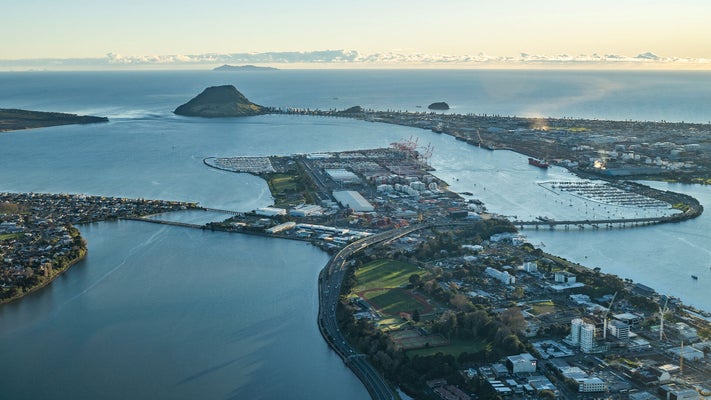
Photo credit: Priority One
Core fundamentals are aligning in the Western Bay of Plenty as growth is being supercharged across property sectors.
Major projects advancing across the Western Bay of Plenty are propelling the region into a pivotal growth phase, supported by significant public and private investment.
Bayleys Tauranga commercial sales manager, Mark Walton says the sub region is experiencing strong development momentum, robust industry fundamentals and growing cross-sector market interest.
“Council-led rezoning and targeted upgrades to roading and utility infrastructure are strengthening the region’s resilience and supporting future business, employment and housing growth.
“The diverse economy driven by horticulture, the Port of Tauranga, logistics, research and education, underpins strong demand for property and labour and positions the region firmly within New Zealand’s high performing Golden Triangle.”
Tauranga’s population is among the fastest growing in New Zealand, with Stats NZ projections showing it could add tens of thousands of people over the next 30 years.
The Western Bay of Plenty Regional Deal is moving forward, with negotiations between local and central government aimed at unlocking 40,000 new homes, 35,000 jobs and major infrastructure upgrades. Aligned with the SmartGrowth strategy, an urban growth partnership under the Government’s Urban Growth Agenda, the agreement reflects a unified approach to managing the region’s next phase of development to deliver real GDP growth.
Mixed use projects across existing urban centres and emerging communities such as Tauriko West are gathering momentum, supported by significant roading improvements and a strategic focus on balancing growth, liveability and long term economic resilience, explains Walton.
“The Tauranga CBD is leading the charge, and while there have been frustrations around timing, delivery and funding for some major game changing projects, there’s no gain without pain.
“The jigsaw puzzle is well advanced, and once the remaining pieces slot into place, Tauranga will be not just one of the country’s biggest cities, but one of the most progressive.
“Major city‑centre projects are reshaping Tauranga’s urban landscape. Anchor developments such as Tauranga City Council’s new base which is New Zealand’s largest mass‑timber office building, the new Civic Centre, the Justice Precinct and several private office projects are redefining the CBD’s commercial core.”
At the same time, the University of Waikato’s Tauranga campus is expanding its footprint, injecting more students and activity into the city centre. Higher‑density inner‑city living is also on the rise, signalling a more vibrant, people‑focused urban environment, Walton explains.
“Key projects are either completed, underway or in a committed pipeline. As these catalysts really come online, retail and hospitality activity is expected to lift, supported by rising pedestrian numbers and a growing tertiary student population.
“There are only a handful of prime sites left for redevelopment in the CBD. Landlords are collecting solid holding income in the interim and will be well-poised to leverage the high level of amenity in the city once core projects are completed.”
Tauriko West is emerging as a major growth hub for the region, with large greenfield sites set to deliver significant new housing supply over the coming years. The area will evolve into a well connected, mixed density neighbourhood, designed for residents to live, learn, work and play, supported by major roading upgrades and coordinated, master planned amenities.
“Bayleys is marketing Ferncliffe Farm, an 82-hectare Medium Density Residential-zoned site that is fully development ready, with zoning, consents and roading upgrades already secured, enabling a staged residential project supported by new transport and education infrastructure. “The Tauriko West growth corridor is poised for major transformation and will play a central role in Tauranga’s next phase of urban expansion. An early anchor for the area, the Tauriko Business Estate has already demonstrated strong commercial demand, proving the location’s long term viability.”
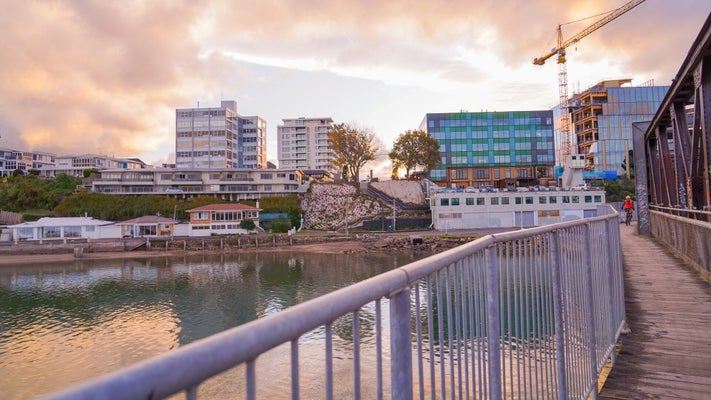
Photo credit: Priority One
Getting priorities right
Priority One is the economic development organisation for the Western Bay of Plenty, acting as a connector and facilitator to bring together the private sector, government, councils and investors to align priorities, unlock opportunities, and enhance the region’s ability to attract and support high quality investment.
With strong population and economic growth forecasts, and the prospect of a Regional Deal being finalised with central government, the region is well positioned for increased investor confidence, says Priority One’s chief executive, Dave Courtney.
“In 2022 we launched the Tauranga City Blueprint, a comprehensive overview of planned catalyst projects and developments to transform and revitalise the CBD. This helped to instil investment confidence and focus developer interest connecting them with future tenants.
“Today, 18 of the 20 projects outlined in the Blueprint are either completed or underway. Only two did not progress being the development next to Sharp Tudhope, which is now a Tauranga City Council carpark, and an apartment complex in Selwyn Street where the land is now for sale.
“When the blueprint was completed, it was estimated to represent $1.5 billion dollars of investment into the city - today that figure is estimated to be more like $2.5 billion.”
Courtney says despite post-pandemic headwinds and some market volatility, there are some huge wins to celebrate in the CBD.
“The Elizabeth Towers complex has revitalised a key part of the city centre, boosting retail and hospitality activity while adding new apartments that expand local living options. The Northern Quarter has further lifted The Strand’s appeal, delivering modern office and hospitality spaces and the prospect of an international hotel will strengthen the area’s visitor offering.
“Major commercial projects are also reshaping the CBD. Craigs Investment Partners’ new headquarters at the bottom of Devonport Road joins Panorama Towers and the Tauranga City Council’s new buildings as significant additions to the city’s growing commercial precinct.
“Meanwhile progress across the Civic Centre Te Manawataki o Te Papa – including the Toi Art Gallery, library, museum and the enhanced waterfront playground – is creating a cluster of cultural and recreational amenities. Together, these developments will draw more locals and visitors into the heart of the city, providing a strong boost to retail and hospitality businesses.”
Courtney stresses that rejuvenating a city is no easy feat, with city revitalisation requiring persistence and community liaison. With most projects advancing visibly, people can see the high quality assets transforming the city centre and it’s a great launch pad for the organisation’s wider work.
“Priority One is focused on the core drivers of economic development – people, investment, and innovation. In the short term, this includes strengthening education‑to‑employment pathways, building workforce capability and helping employers attract and retain the talent the Western Bay needs for the future.
“Alongside this, through our Investment Attraction Advisory Group we are working with partners across the region to position the Western Bay as ‘investment‑ready’. This means progressing credible opportunities that lift productivity, generate higher‑value jobs, and support long‑term economic resilience. We are also expanding the region’s innovation ecosystem by connecting founders and businesses with early‑stage capital and backing initiatives that address growth, productivity and sustainability challenges.”
“These initiatives align with recent changes to national business and investment migration settings, which have already generated strong early interest. We expect these visas to attract investors who bring not only capital but specialist skills and global networks, further enhancing the region’s appeal as a place to live, invest and do business.”
Genuine university centre
The University of Waikato has outlined the next phase of growth for its Tauranga city centre campus, confirming the acquisition of the Bongard Centre and Craigs Investment Partners building on Cameron Road (the latter to be vacated once the firm relocates to new premises in Devonport Road).
The buildings will support a mix of teaching, research and student-orientated facilities. The University has also secured long-term leases on other commercial buildings in Durham Street and Cameron Road for student accommodation expansion.
Since opening in 2019, enrolments at the Tauranga campus have continued to grow, with more than 1,500 students now studying in the city centre. The University has plans to continue expanding academic programmes, to strengthen research activity, attract more international students and deepen iwi, industry and community partnerships, which will help position Tauranga as a genuine university city, according to deputy vice-chancellor, Professor Alister Jones.
“Our growth in the city centre reflects a shared vision for Tauranga’s future. We are strengthening our footprint in ways that support students, connect with community and contribute positively to the wider transformation of the city.
“We are working closely with local councils, iwi, and community and industry partners, to ensure our expanded academic programme offering aligns with regional growth sectors including health, construction, education, mātauranga Māori, coastal management and technology.
“Where possible, we will leverage existing amenities and facilities for efficiency, such as the new Tauranga Library, and work alongside community partners to support the teaching of law, teacher education and health services.”
The New Zealand Institute for Marine Futures, a University of Waikato initiative, is to be built at Tauranga’s Sulphur Point with construction expected to start in 2028. The state-of-the-art facility will strengthen the University’s interdisciplinary and collaborative approach to marine research and education.
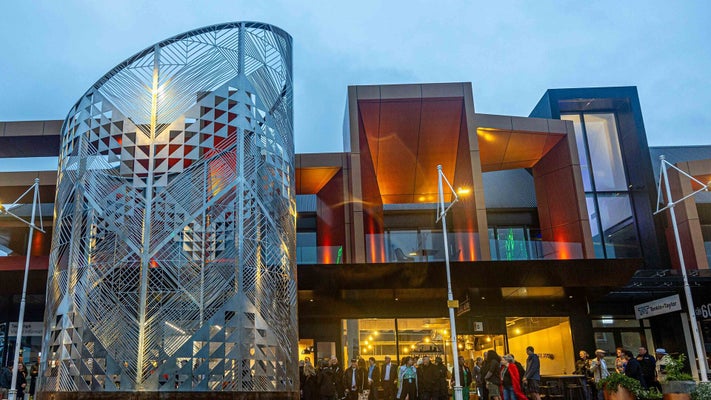
Photo credit: Priority One
Place to call home
Bayleys residential sales and projects manager for the Bay of Plenty, Jon O’Connor says the Western Bay of Plenty is maturing into a region with deep anchors.
“People have always been drawn to the Bay of Plenty for its sunshine, beaches, outdoor lifestyle and tight-knit community. Today, those lifestyle strengths are being matched by strong structural drivers that are setting the region up for its next phase of growth.
“Infrastructure upgrades are finally gaining momentum, investment is flowing in from both public and private sectors and a wave of new development from greenfield communities to higher-density city living is poised to significantly boost housing supply.”
O’Connor says confidence is quietly returning to the residential property market. Sales volumes have eased back to long run average levels, but prices have held relatively firm. He notes that the local house price index lifted one percent over the past year, even as the overall national trend declined.
“Lower interest rates have encouraged more activity and stronger vendor confidence has pushed the number of homes for sale above 2,200 across the Bay of Plenty — around 30 percent higher than the long term average at the end of 2025.
“While buyers are feeling more assured thanks to cheaper borrowing costs, the increase in available stock is helping keep a lid on price growth.”
Amenity upgrades, transport improvements, and education investment, alongside a stronger regional growth plan, is creating greater certainty around housing and infrastructure delivery and supporting property markets across the region, O’Connor says.
“Construction pipelines are picking up and while consenting doesn’t always equal completing, there should be a gradual lift in supply to further bolster choice – I’d describe it as a measured recovery.
“Ōmokoroa now has a coordinated structure plan in place, and Tauriko West is emerging as one of the region’s most significant new communities, supported by major transport upgrades and high amenity design.
“Meanwhile, Pāpāmoa East and Te Tumu continue to experience strong growth, and Tauranga’s Plan Change 33 will enable intensification around the city centre to further broaden housing choice.”
Region shapers
- Tauranga’s Transport System Plan (TSP) has secured circa-$177 million in infrastructure funding and financing investment to support major transport projects.
- A circa-$83 million electricity infrastructure plan aims to expand capacity to meet rising demand in Tauranga and Western Bay as population and industry grow.
- A circa-$97 million upgrade to the Tauriko West road network, including widening SH29/29A to support residential and business development.
- Asclepius Surgical will occupy levels 6–11 of Panorama Towers on Hamilton Street, providing six operating theatres, two procedure suites, and 60 beds for both public and private elective surgeries.
- Papamoa Plaza is expanding with new retail space planned.
- Tauriko Business Estate, one of Australasia’s largest industrial subdivisions, continues to experience strong growth and ongoing expansion.
- Rangiuru Business Park, a 148‑hectare Quayside Properties development near Te Puke, is progressing well, with 70 percent of Stage 1 now under contract and strong demand driven by its proximity to key transport links.
- Port of Tauranga is undertaking due process to expand its capacity to meet future import/export needs, and to accommodate larger vessels. The Port has a live application under the Fast-track Approvals legislation, and this is currently under review by the Environmental Protection Authority.
Contact us


